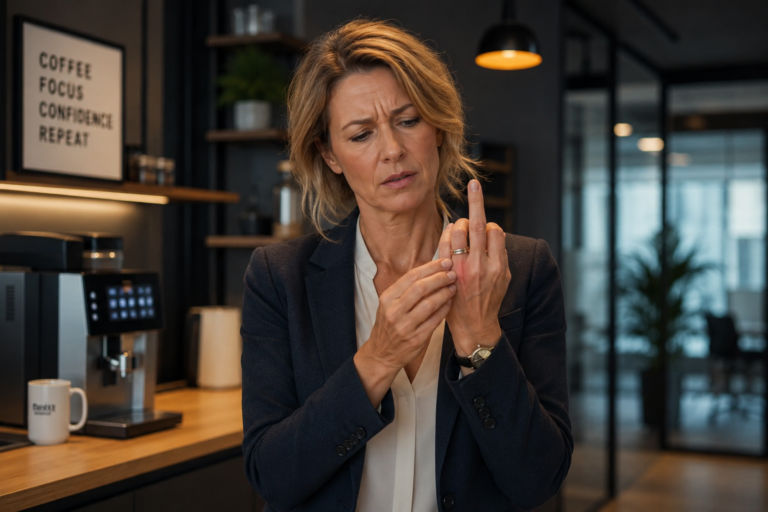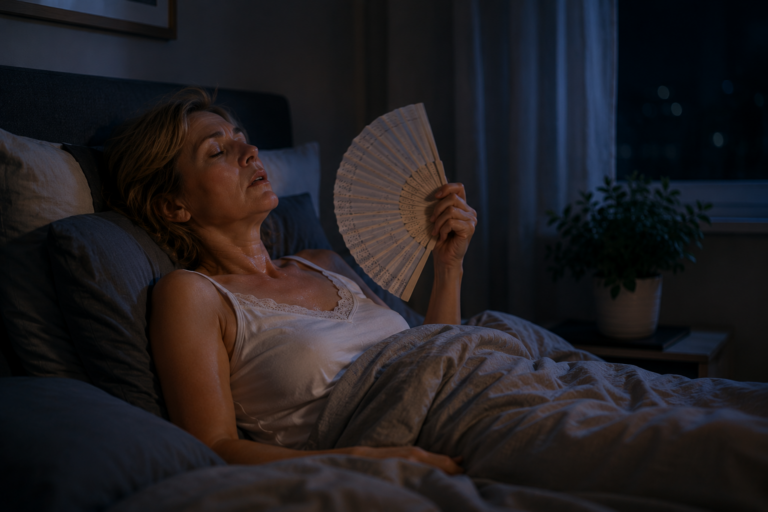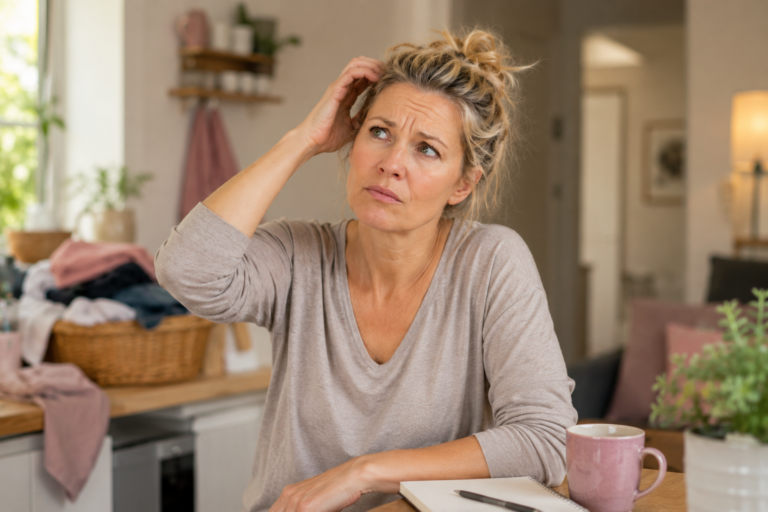
Poor sleep, hot flushes, aching joints and a temper stretched like a fishing line: why, at around 53, I finally asked about hormone replacement therapy.
After several years of poor sleep, hot flushes, joint pain and a belly that seemed increasingly determined to take centre stage, I had had enough. I was about 53. And honestly, I was probably not the only one in my family who felt that way.
I was irritable like a fishing line pulled tight. I have never been the most patient person, but during that period? Good grief. Of course, the reasons for losing my temper were completely real — THEY OBVIOUSLY WERE! 😆 Yet it felt as if I spent the whole day halfway up a palm tree, ready to shoot straight into its highest leaves at the slightest provocation.
It was awful for me too. My nervous system felt as though I were sitting in a roller coaster just before the next drop. A constant fizz somewhere in my centre seemed to warn me: Be careful. Something is about to happen around the next corner. And what happened? Quite often: nothing.
Several friends had independently told me about similar experiences — different for every woman, of course — and said that they were now using hormones. “Body-identical hormones” kept coming up. I did not need that, I thought. A few supplements here, a lifestyle adjustment there. I would manage.
Okaaay. I did not.
So what about hormones?
I am not someone who has a particularly close relationship with her doctors. I go when I have to. I know — please do not follow my example. 😆 My last appointment had been a very long time ago, and I received a deserved telling-off.
Then I asked the question I had been avoiding: What about hormone therapy?
My doctor was heavily pregnant, and my first completely irrational thought was: What could she possibly know about my problems? Apparently, prejudice can still thrive in our mid-fifties. She had in fact studied menopause care closely and explained far more than I want to reproduce from a personal consultation.
Do I need a hormone blood test first?
My immediate question was about blood tests. Surely we had to measure my hormones before we could know what was missing?
For otherwise healthy women aged 45 or over with typical menopausal symptoms, perimenopause or menopause is usually identified from age, symptoms and menstrual changes — not from one isolated hormone result. Hormone levels can fluctuate considerably during perimenopause, so a single measurement is a poor still photograph of a fast-moving film. Current NICE guidance advises against routinely using an oestradiol test to identify menopause in this group.
That does not mean blood tests are never useful. They may be appropriate for younger women, unusual symptoms, certain medical conditions or other diagnostic questions. Before HRT, symptoms, medical history and individual risk factors belong in a proper clinical consultation.
Why oestrogen and progesterone?
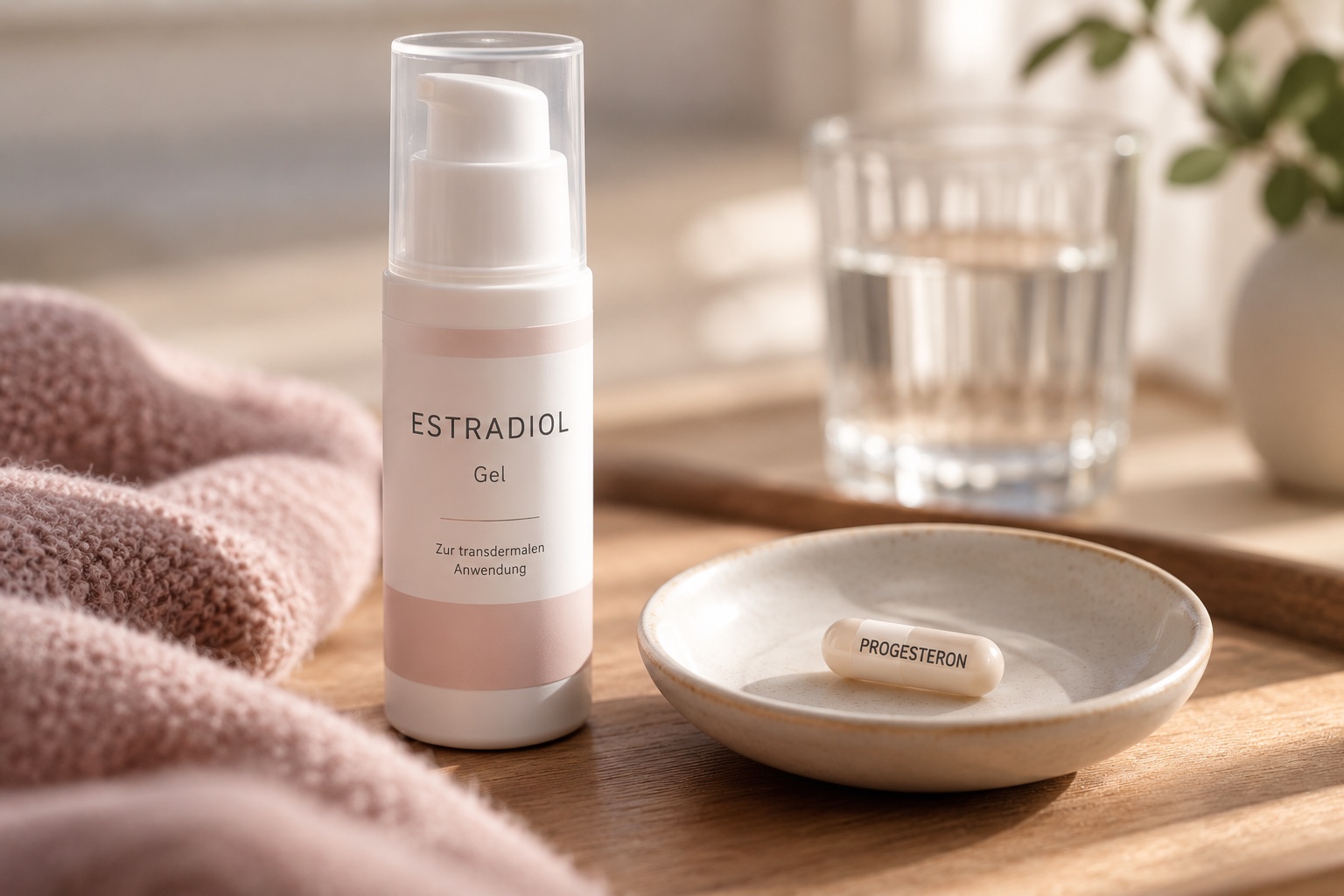
My doctor eventually prescribed an oestrogen gel and progesterone: gel on the skin in the morning, a progesterone capsule in the evening, and then we would see. Naturally, I had approximately 748 questions. Why two hormones?
Oestrogen is central to many forms of systemic HRT. If a woman still has her uterus, systemic oestrogen is normally combined with a progestogen such as progesterone. Oestrogen can stimulate the lining of the womb; the additional progestogen protects it from excessive stimulation. After a total hysterectomy, oestrogen-only HRT may be suitable in many cases.
What does “body-identical” actually mean?
At first, “body-identical” sounded to me like health-food shops, wild yam and someone mixing hormones under a full moon. 😆 The term itself is far less dramatic: it describes hormones with the same molecular structure as those produced by the human body.
Examples include oestradiol and micronised progesterone. The important distinction is between regulated, standardised medicines and unregulated custom-compounded preparations. A label such as “natural” or “bioidentical” does not automatically make a product more effective or safer.
What a menopause book helped me understand
Alongside treatment, I wanted to understand what was happening to me. A German book called Woman on Fire by Dr Sheila de Liz gave me an accessible, direct and humorous introduction. It did not replace an individual medical consultation, but it helped me ask better questions. The current ANNILIV review and any product links remain on the German site until we have a properly localised English recommendation.
Then something happened at night
My doctor had warned me that noticing a change could take time. For me, it happened surprisingly quickly.
After roughly one week, something occurred that sounds completely ordinary to anyone who has not lived through chronic broken sleep. To me it felt like Christmas, a birthday and a lottery win all at once:
I woke up — and went back to sleep.
People!!!
I was no longer demanding eight uninterrupted hours. My standards had dropped considerably. 😆 I simply did not want to open my eyes at 3 a.m. and then lie awake for three hours while my brain attempted to solve every problem in the world. Suddenly I woke briefly, turned over and fell asleep again. For me, that was a profound change.
This does not mean every woman will notice the same effect after a week. HRT can be particularly effective for hot flushes and night sweats and may therefore improve sleep for some women. How quickly it helps, and which symptoms change, varies.
And what about my belly?
To me, it also seemed to retreat slightly from centre stage. It did not disappear — we are not telling fairy tales here. 😆 My body shape felt a little different and I felt more comfortable overall.
This is a personal observation, not a promised treatment effect. HRT is not a weight-loss treatment and should never be marketed as one. Body composition and fat distribution can change across the menopause transition, but many factors are involved.
Hormones are neither poison nor sweets
HRT is one of the most effective treatments for menopausal hot flushes and night sweats. Systemic HRT also helps prevent menopause-related bone loss while it is being used. The decision must nevertheless be individual.
The hormones, dose and route — gel, patch, spray or tablet — depend on symptoms, age, health history and personal risk factors. I would never tell another woman, “Take hormones; they are wonderful.” I can only say that they helped me enormously.
HRT has benefits and risks. With combined HRT, for example, breast cancer risk may increase with longer use. Some risks differ by route: NICE states that venous thromboembolism risk is not increased with transdermal HRT, whereas it is increased with oral HRT. That does not make one form automatically right for everyone; it makes individual advice important.
Neither “hormones are dangerous” nor “hormones are completely harmless” is a useful slogan. The real task is to weigh personal benefit against personal risk.
What changed for me
The most obvious difference was sleep. That alone was enormous. My hot flushes and constant high-voltage feeling also improved. I had already addressed my joint symptoms in other ways, and gradually my body began to feel more like my body again.
Perhaps the most important change was that I stopped telling myself to pull myself together. Yes, these symptoms can occur during menopause. But common does not mean we must suffer in silence for years.
When I would seek help sooner today
For a long time I believed I should be able to manage on my own: supplements, willpower, sleep hygiene, food and movement. Some of those things still help me. Eventually, however, I had to admit that I was not well — not merely a bit annoyed or “just getting older”, but affected in my daily life and quality of life.
For me, discussing HRT was the right step. It is not right for every woman. Not everyone needs or wants it, and for some people it may be unsuitable or require particularly careful assessment. Non-hormonal treatments are also available.
If you are thinking, “I do not want to feel like this for the next few years,” I would now do one thing differently: learn about the options and speak to a qualified doctor about what may be appropriate for you.
I am sharing this as a woman who once stood in exactly that place and thought: Okay. So what about hormones? 🌸
The essentials in 30 seconds
- My experience: my sleep, hot flushes and inner tension improved most clearly.
- No guarantee: response, preparation and dose are individual.
- Diagnosis: in otherwise healthy women aged 45 or over with typical symptoms, routine hormone testing is usually unnecessary.
- Uterus present: systemic oestrogen is normally combined with a progestogen to protect the womb lining.
- Benefits and risks: both require individual medical assessment. HRT is neither a weight-loss treatment nor universally harmless or dangerous.
FAQ: Hormone replacement therapy during menopause
What is hormone replacement therapy?
Menopausal hormone therapy — commonly called HRT or MHT — uses hormones to treat troublesome menopausal symptoms. Systemic oestrogen is available in forms including gels, patches, sprays and tablets.
Do hormone levels need to be measured before HRT?
Usually not to identify perimenopause or menopause in otherwise healthy women aged 45 or over with typical symptoms. Tests may be useful at younger ages, with atypical symptoms or for particular medical questions.
Why are oestrogen and progesterone combined?
When the uterus is present, its lining needs protection during systemic oestrogen treatment. A progestogen such as progesterone is therefore normally added.
What are body-identical hormones?
Their molecular structure matches hormones produced by the body. Regulated medicines may contain oestradiol or micronised progesterone. The term alone does not prove superior effectiveness or safety.
How quickly does HRT work?
It varies. I noticed the first sleep change after about one week, but that is my experience, not a deadline. Other women may need several weeks, and the preparation or dose sometimes requires clinical adjustment.
Can HRT improve sleep?
It may improve sleep when hot flushes or night sweats are disturbing it. Persistent sleep problems can have many causes and deserve assessment.
Is a gel or patch safer than a tablet?
“Safer” is too broad. Certain risks differ: NICE states that venous thromboembolism risk is not increased with transdermal HRT but is increased with oral HRT. The appropriate route depends on the individual.
Does HRT help with weight loss?
No. HRT is not a weight-loss treatment. Body composition and fat distribution can change around menopause, but my observation about my belly is personal and not an outcome everyone should expect.
Is HRT risk-free?
No. Benefits and risks depend on factors including age, symptoms, medical history, formulation, route and duration. Treatment should begin after individual medical advice and be reviewed regularly.
Sources and further reading
- NICE: Menopause — identification and management (recommendations, updated 2026)
- AWMF: S3 guideline on peri- and postmenopause (German guideline, 2026)
- Pinkerton et al.: Hormone therapy, nocturnal vasomotor symptoms and sleep
- Greendale et al.: Body composition and weight changes during the menopause transition
This article describes my personal experience with medically prescribed HRT. Appropriate treatment depends on individual health circumstances. It does not replace diagnosis or medical advice and does not recommend a particular product or dose.